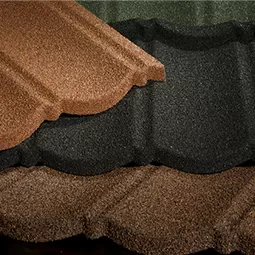
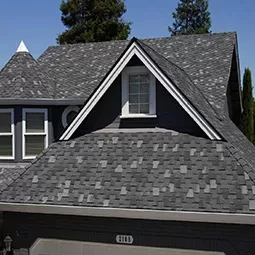
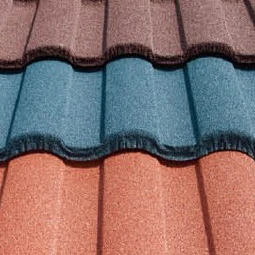
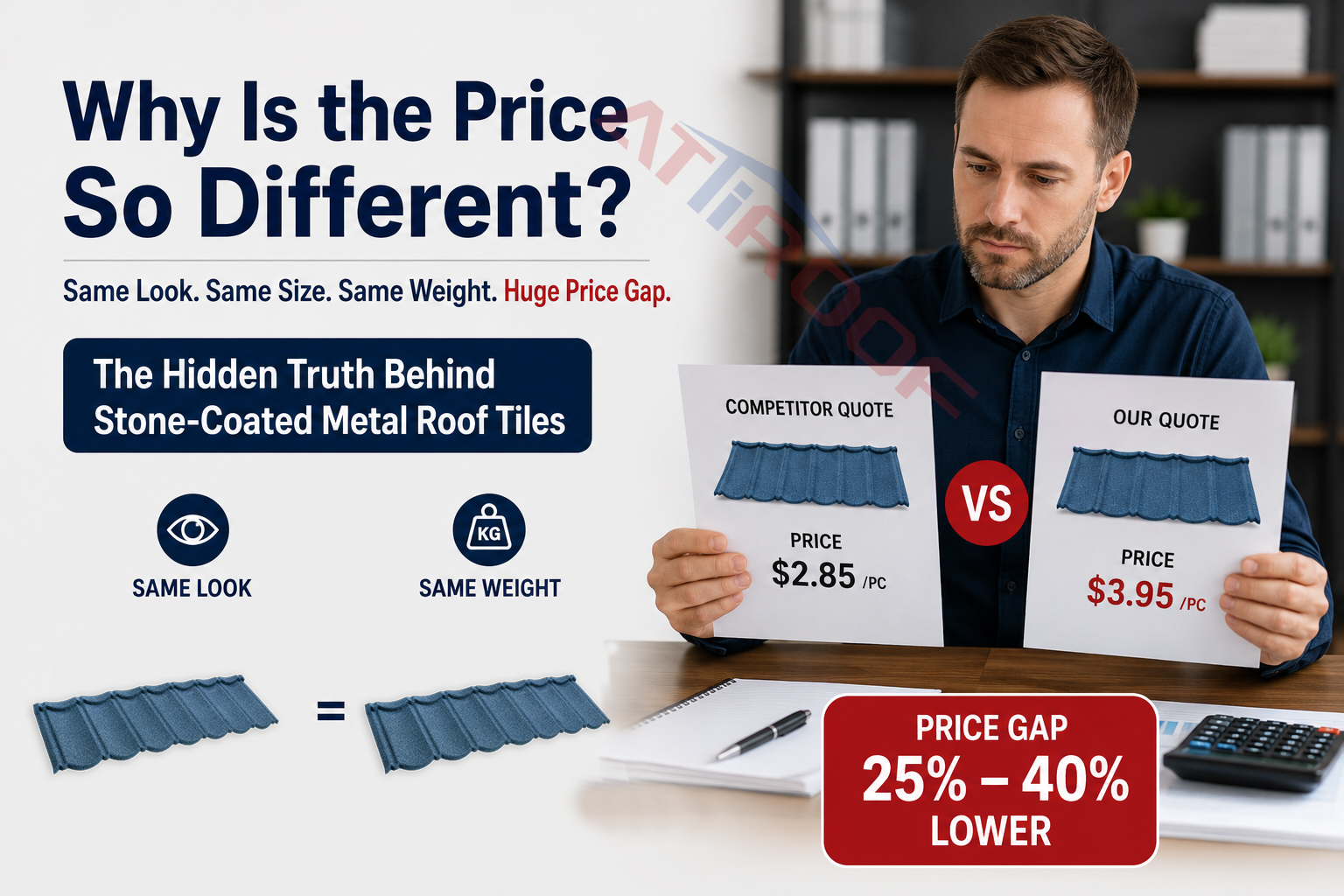
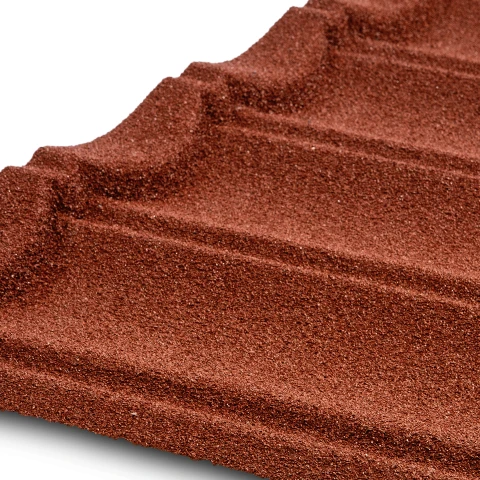
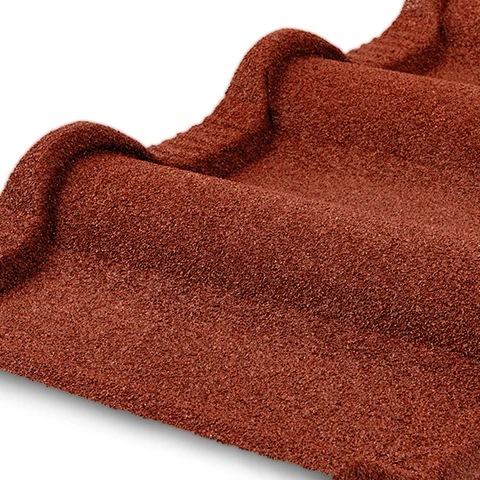
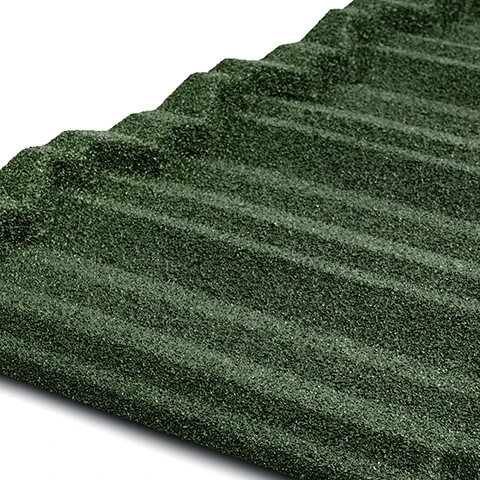
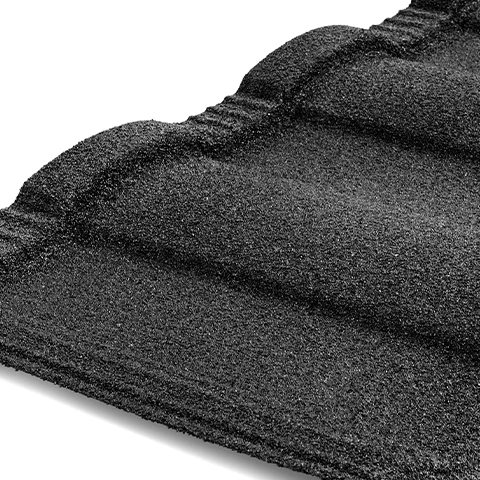
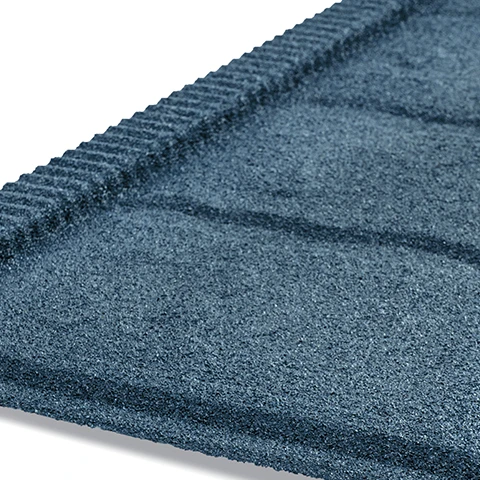
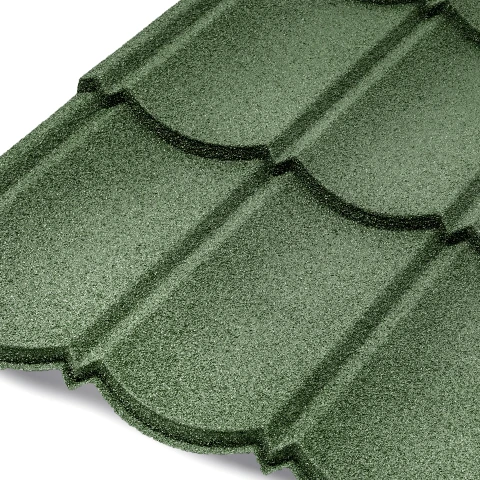
Let's be honest about what buyers typically check when comparing two tile samples:
- Overall thickness of the steel sheet
- Tile profile and dimensions (does it match the spec?)
- Stone granule color and coverage
- Weight per tile or per square meter
Here's the uncomfortable truth: all of these are surface-level checks. A cheap factory can easily match thickness, weight, and appearance — and still be selling you a fundamentally inferior product.
The real cost driver? It's the part you can't see without a lab test: the Aluzinc coating on the steel substrate.
What Is Aluzinc Steel, and Why Should You Care?
Stone-coated metal roof tiles start with a steel sheet. That sheet isn't bare steel — it's coated with a hot-dip aluminum-zinc-silicon alloy, commonly called Aluzinc (or Galvalume, depending on your market).
The standard alloy composition is roughly this:
- 55% Aluminum — provides barrier protection against oxidation
- 43.4% Zinc — offers sacrificial (cathodic) protection at cut edges and scratches
- 1.6% Silicon — ensures the coating bonds properly to the steel
This combination is what gives the steel its corrosion resistance. Without it, you'd be stamping tiles out of steel that starts rusting the moment it's exposed to moisture.
Now, here's where things get interesting. The ratio of aluminum to zinc stays fairly consistent across suppliers. But the thickness of this alloy layer? That varies enormously.
The Hidden Variable: AZ Coating Mass
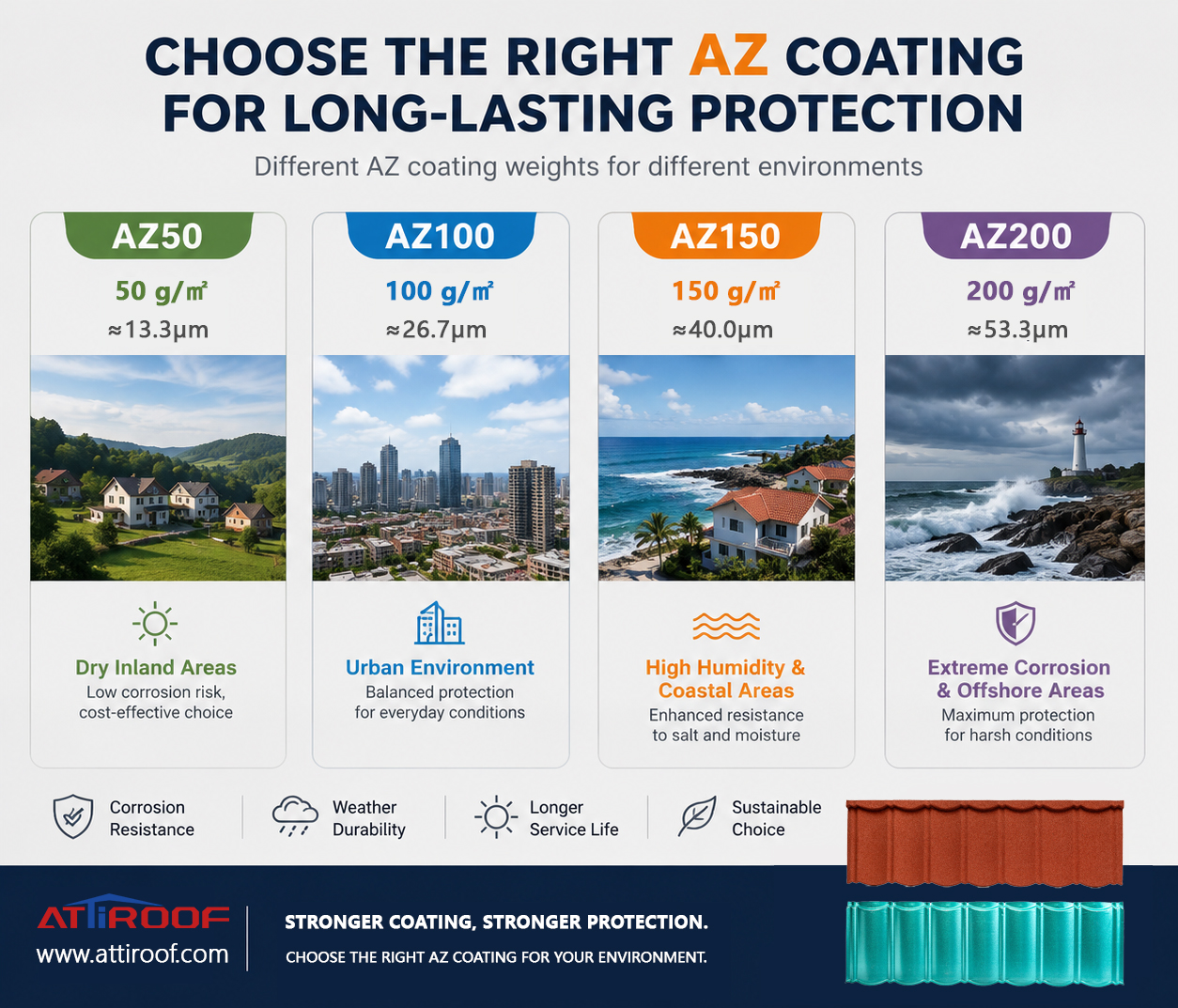
The thickness of the Aluzinc coating is expressed as a coating mass designation — AZ50, AZ100, AZ150, AZ200, and so on. The number refers to the total grams of alloy per square meter of steel (both sides combined).
To put some real numbers behind this, let's calculate the actual coating thickness. Aluzinc alloy has a density of approximately 3.75 g/cm³, so:
| AZ Grade |
Coating Mass (g/m²) |
Approx. Total Coating Thickness |
Real-World Use |
| AZ50 |
~50 g/m² |
~13.3 μm |
Indoor use or temporary structures only |
| AZ100 |
~100 g/m² |
~26.7 μm |
Mild climates; standard commercial grade |
| AZ150 |
~150 g/m² |
~40.0 μm |
Architectural standard for weather resistance |
| AZ200 |
~200 g/m² |
~53.3 μm |
Coastal areas, heavy industrial environments |
Note: The coating mass values above follow the metric convention (g/m² total, both sides). In ASTM A792 imperial notation, AZ50 (imperial) ≈ 150 g/m², so always verify which system your supplier is using. 1
These numbers might look small — we're talking about microns, after all. But the performance gap between them is anything but small.
Where Cheap Factories Cut Corners
Here's what happens at the low end of the market.
A factory trying to win on price alone will use the thinnest Aluzinc coating they can get away with — typically AZ50 or even lower. They'll stamp it into a tile, apply the acrylic primer, bond the stone granules on top, and ship it out.
On day one, month one, even year one — the roof looks fine. The stone coating hides everything underneath. The buyer is happy. The contractor installed it without issues. No one suspects a thing.
Fast forward to year four or five.
The thin alloy layer starts breaking down. Moisture penetrates through microscopic weak points. The steel substrate begins to corrode — not from visible damage, but from underneath the stone layer where nobody can see it. By the time rust spots appear on the surface, significant structural degradation has already occurred.
I've seen project owners face this nightmare firsthand. A commercial building in a coastal climate, roof installed with AZ50-substrate tiles — by year six, the owner was filing claims against the contractor, who in turn was chasing the importer, who couldn't reach the factory because it had rebranded under a different name. That's not a hypothetical. That's a real pattern in this industry.
What Each AZ Grade Actually Delivers in Practice
Let me break this down from a practical procurement perspective, not a textbook:
AZ50 (~13.3 μm): Honestly, this shouldn't be on any outdoor roof. It's fine for interior decorative panels or temporary exhibition structures. If someone is quoting you stone-coated tiles for an outdoor project at a suspiciously low price, there's a good chance the substrate is around this range.
AZ100 (~26.7 μm): This is the entry-level outdoor grade. It works in mild, dry climates — think inland areas with low humidity and no salt exposure. But in any environment with heavy rain, coastal air, or industrial pollutants, it will start degrading noticeably earlier than you'd expect. I'd estimate 10-15 years of reliable performance before corrosion risk becomes a real concern.
AZ150 (~40.0 μm): This is what we consider the architectural standard for serious roofing. With proper stone coating and installation, an AZ150 substrate can deliver 30 to 50 years of service — even in challenging weather conditions. When we recommend specifications to our clients, AZ150 is almost always the baseline for projects that require long-term reliability.
AZ200 (~53.3 μm): Heavy-duty protection. This is what you spec for coastal properties within a few kilometers of saltwater, or industrial zones with airborne chemical exposure. It's overkill for most residential projects, but when the environment demands it, there's no substitute.
There's a saying among factory engineers here: "The stone coating sells the tile. The AZ coating keeps it alive."
Why You Can't Judge This by Weight or Thickness Alone
I want to address a common misconception I hear from buyers.
"Both tiles weigh the same," they'll tell me. "Both have the same total steel thickness. So the steel must be the same quality, right?"
Not necessarily.
The total thickness of the steel sheet includes the base steel plus the coating. Two sheets can have the same total thickness but very different coating-to-steel ratios. A tile with a 0.40mm base + heavy AZ150 coating can have the same total gauge as a tile with a 0.42mm base + thin AZ50 coating.
The heavier coating adds weight. The thicker base steel adds weight. Without knowing the breakdown, total weight tells you almost nothing about corrosion resistance.
This is why mill test certificates (MTCs) matter. A legitimate supplier should be able to provide documentation from the steel mill that specifies the exact coating mass, not just the total gauge. If a factory can't or won't produce these certificates, that's a red flag.
How We Handle This at Attiroof
I'm not going to pretend we're the cheapest option in the market. We're not trying to be.
Our position is simple: we use the substrate that the project actually needs, and we document it. Every batch of Aluzinc steel that enters our stamping line comes with full traceability — mill source, coating mass certification, mechanical properties. If a client's project is in Southeast Asia with monsoon seasons and 80% humidity, we're going to recommend AZ150 minimum. Not because we want to upsell, but because we've seen what happens when the wrong spec gets installed in the wrong climate.
We also refuse to bid on projects where the buyer is asking us to "match" a competitor's price that clearly implies AZ50-grade substrate for outdoor use. It's not worth the liability, and honestly, it's not worth the damage to our reputation when the roof fails five years later.
The way we see it: a roofing manufacturer's real product isn't just the tile. It's trust that the roof won't become someone else's expensive problem.